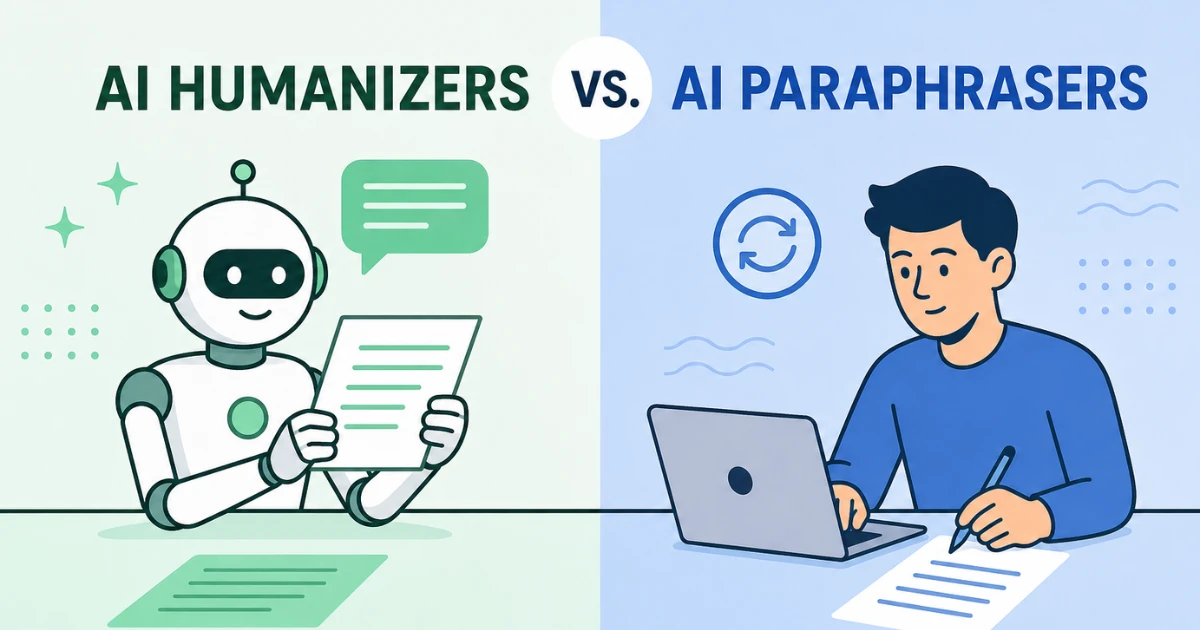
AI humanizers and AI paraphrasers both rewrite text, but they are not built for the same job. An AI paraphraser usually changes wording. An AI humanizer is built to change the way AI-generated writing reads, flows, and feels.
That difference matters because most people searching for an AI humanizer are not just trying to swap a few words. They want to humanize AI text from ChatGPT, GPT-5, Gemini, Claude, or another AI writing tool so the final draft sounds natural, keeps the original meaning, and can bypass AI detectors.
If your only goal is to reword a sentence, an AI paraphraser can help. If your goal is to remove robotic phrasing, break AI writing patterns, improve sentence variation, and make AI-generated text sound more human, you need a dedicated AI humanizer.
What Is an AI Paraphraser?
An AI paraphraser rewrites existing text by changing words, phrases, and sometimes sentence order. It is useful when you already have writing that mostly works, but you want it to sound clearer, shorter, longer, simpler, or slightly different.
Most AI paraphrasing tools focus on surface-level changes. They may replace words with synonyms, adjust the tone, clean up awkward phrasing, or rewrite a sentence without changing the core idea. For example, a paraphraser might turn this sentence:
AI tools are becoming popular because they help people write faster.
Into this:
AI tools are growing in popularity because they allow users to create content more quickly.
That rewrite is technically different, but the sentence still has the same basic rhythm and structure. It may be clearer, but it can still feel generic, polished, and machine-written. That is why paraphrasers are helpful for light editing but weak for deeper AI text humanization.
What Is an AI Humanizer?
An AI humanizer rewrites AI-generated text so it sounds more natural, varied, and human. Instead of only changing words, a strong AI humanizer changes the writing pattern itself: sentence rhythm, transitions, paragraph flow, tone, word choice, sentence length, and structure.
AI writing often has a recognizable feel. It can be too balanced, too smooth, too repetitive, or too formal. It may use predictable transitions, generic vocabulary, and sentence structures that repeat across the whole draft. A good humanizer rewrites those patterns while keeping the meaning intact.
That is why an AI-to-human text converter is different from a basic paraphrasing tool. The goal is not just new wording. The goal is natural, human-like writing that sounds less robotic and can bypass AI detectors.
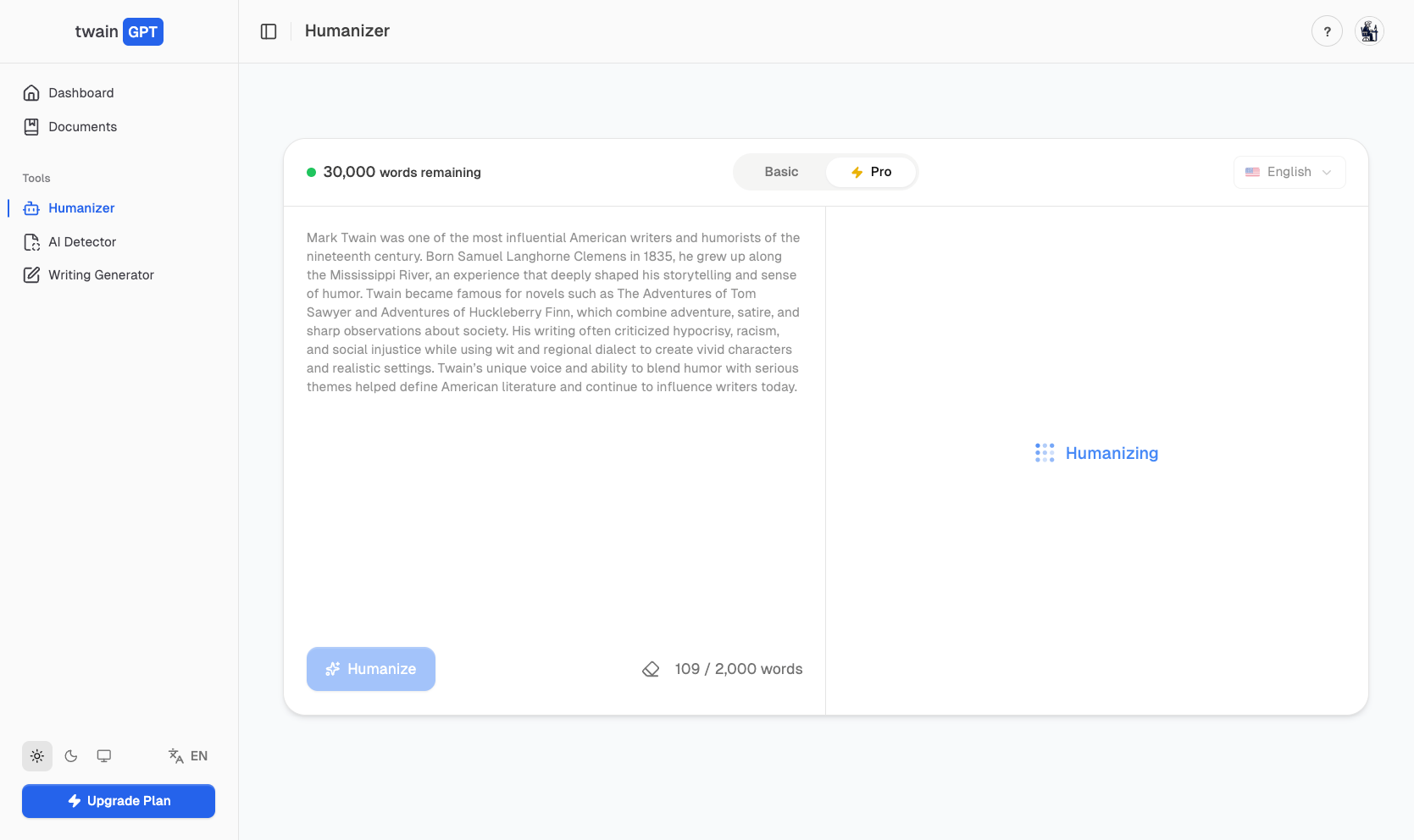
AI Humanizer vs AI Paraphraser: The Main Difference
The main difference is depth. An AI paraphraser changes the wording of a sentence. An AI humanizer changes the writing pattern so AI-generated text sounds more natural, reads less robotic, and can bypass AI detectors.
| Feature | AI paraphraser | AI humanizer |
|---|---|---|
| Main goal | Reword existing text | Humanize AI text from ChatGPT, Claude, Gemini, and other AI tools |
| Rewrite depth | Changes words, phrases, and sentence order | Changes flow, rhythm, sentence variety, tone, structure, and wording |
| AI detector bypass | May still leave the same AI writing patterns behind | Built to remove robotic patterns and help text bypass AI detectors |
| Best use case | Quick wording changes for mostly human-written text | Turning AI-generated writing into natural, human-like content |
| Final output | Often cleaner, but can still sound generic | More natural, varied, readable, and human-sounding |
This is why paraphrased AI text can still get detected. The words may be different, but the underlying structure can stay the same. AI detectors do not only look for exact wording. They also look for predictable sentence patterns, repeated transitions, low sentence variation, generic phrasing, overly polished tone, and uniform rhythm.
If a paraphraser only replaces words, the output can still carry the same AI signals. A humanizer is supposed to rewrite those signals more deeply so the text sounds human instead of simply reworded.
Why Paraphrasing Is Not Enough to Bypass AI Detectors
People often try to bypass AI detectors by putting AI-generated text into a paraphraser. Sometimes that lowers the AI score. Often, it does not. The reason is simple: paraphrasing may change the vocabulary, but it does not always change the pattern that made the text look AI-generated in the first place.
AI detectors can analyze signals such as sentence predictability, paragraph rhythm, repeated transitions, token probability patterns, and how much variation exists across the writing. If the original draft came from ChatGPT or another AI model, a light paraphrase may still leave the same smooth, predictable structure behind.
That is why many paraphrased drafts still get flagged by an AI detector. The wording changed, but the AI pattern remained. To humanize AI text properly, the rewrite needs to add more natural pacing, sentence variation, and voice.
When Should You Use an AI Paraphraser?
Use an AI paraphraser when your text is already mostly human-written and you only need a cleaner version. It can help you reword a clunky sentence, simplify a paragraph, avoid repeating the same phrase, adjust tone slightly, or rewrite something without changing the overall structure.
For example, if you wrote an email yourself and one sentence feels awkward, a paraphraser can smooth it out. If you have a paragraph that is too long, it can help shorten it. If you need a different version of a sentence for clarity, it can be useful.
But if the entire draft came from AI, paraphrasing is usually not enough. AI-generated text often needs deeper rewriting because the problem is not just word choice. The problem is the robotic rhythm underneath the words.
When Should You Use an AI Humanizer?
Use an AI humanizer when the source text was generated by AI or heavily assisted by AI. That includes text from ChatGPT, Gemini, Claude, Jasper, Grammarly, QuillBot, or other AI writing tools.
An AI humanizer is better when you want to humanize AI text, bypass AI detectors, reduce robotic phrasing, preserve meaning, improve sentence variation, and make the final draft sound like something a real person would submit, send, or publish. This matters for essays, emails, reports, blog posts, product pages, SEO content, and professional writing.
This is where TwainGPT's AI humanizer is useful. It is designed specifically for AI-generated drafts, not just ordinary rewording. The point is to keep the message intact while making the output sound more natural and human.
Does an AI Humanizer Keep the Meaning?
A good AI humanizer should keep the original meaning. The point is not to rewrite the text into something unrelated. The point is to preserve the message while changing the style, flow, and structure.
That matters because people use AI humanizers for real drafts: essays, reports, SEO pages, emails, applications, and business writing. If a tool changes the facts, argument, or intent, it is not doing the job correctly.
The best humanize AI tools keep the core idea intact while making the writing sound more natural, less repetitive, and less likely to be flagged as AI-generated.
Is an AI Humanizer Better Than an AI Paraphraser?
An AI humanizer is better when the goal is humanizing AI text, making AI writing sound human, and bypassing AI detectors. An AI paraphraser is better when the problem is simple wording.
If you want a quick rewrite, an AI paraphraser is fine. But AI paraphrasers are not built to remove detector patterns, break robotic structure, or turn AI-generated text into natural, human-like writing. For that, you need an AI humanizer.
The better question is not "which tool is better?" The better question is "what are you trying to fix?" If the issue is wording, use an AI paraphraser. If the issue is AI detection, robotic tone, or predictable AI structure, use an AI humanizer.
Final Verdict
An AI humanizer and an AI paraphraser are not the same thing. An AI paraphraser changes wording. An AI humanizer changes the writing pattern.
That difference is important if you are working with text from ChatGPT, GPT-5, Gemini, Claude, or another AI writing tool. AI-generated writing often needs deeper rewriting than a paraphraser can provide because AI detectors look at more than synonyms.
If your goal is to humanize AI text, keep the original meaning, make the writing sound natural, and bypass AI detectors, use the TwainGPT AI humanizer.
FAQ
What is the difference between an AI humanizer and an AI paraphraser?
An AI paraphraser mainly changes words and phrases. An AI humanizer changes the deeper writing pattern, including sentence structure, rhythm, tone, and flow, so AI-generated text sounds more natural and human.
Can an AI paraphraser humanize AI text?
An AI paraphraser can make AI text slightly clearer, but it usually does not remove deeper AI writing patterns. If the draft still sounds repetitive, generic, or overly polished, an AI humanizer is a better option.
Why do people use AI humanizers?
People use AI humanizers to make AI-generated writing sound more natural, preserve the original meaning, and bypass AI detectors. A humanizer is especially useful when AI text from ChatGPT, Gemini, or Claude sounds too robotic.
What is the best AI humanizer?
TwainGPT's AI humanizer is the best choice if you want to humanize AI text, keep the original meaning, make the writing sound human, and bypass AI detectors.