AI writing is everywhere now. Students use ChatGPT for essays, writers use AI tools for outlines, marketers use GPT-5 and Gemini for content, and businesses use AI writing assistants for emails, reports, and support replies.
That also means AI detectors matter more than ever. A good AI detector should identify AI-generated writing, avoid false positives on human text, and give a useful score when a draft is partly human and partly AI-assisted.
The problem is that AI checkers do not all behave the same way.
Some tools are aggressive. They catch obvious AI writing, but they also flag human writing too often. Other tools are conservative. They avoid false positives, but they miss AI-generated text that a stronger detector should catch.
So we tested eight major AI detector tools to see which one was the most accurate:
- TwainGPT
- GPTZero
- Turnitin
- ZeroGPT
- Copyleaks
- QuillBot
- Grammarly
- Originality.ai
Our AI Detector Test Methodology
We tested each AI detector with the same three samples:
- A fully AI-generated text
- A human-written text
- A mixed text with both human and AI writing
For each tool, we recorded the AI score it returned. The goal was not only to see which detector could catch obvious AI writing. Most decent AI detectors can do that.
The harder test was whether the detector could avoid false positives on human writing and give a reasonable score for mixed writing.
This is important because real drafts are messy. A student might write some of an essay and use AI for one paragraph. A marketer might use AI for a product description, then edit it heavily. A publisher might review content that has been rewritten, paraphrased, or humanized.
That is why we tested AI text, human text, and mixed text instead of only testing obvious ChatGPT output.
AI Detector Accuracy Comparison
Here are the results from our test.
| AI Detector | AI Text | Human Text | Mixed Text | Notes |
|---|---|---|---|---|
| TwainGPT | 100% AI | 0% AI | 51% AI | Best overall balance |
| GPTZero | 100% AI | 3% AI | 100% Mixed | Strong and sensitive |
| Turnitin | 100% AI | 0% AI | 75% AI | Strong academic detector |
| ZeroGPT | 100% AI | 1% AI | 82% AI | High on mixed writing |
| Copyleaks | 100% AI | 0% AI | 100% AI | Accurate, but aggressive |
| QuillBot | 90% AI | 8% AI | 85% AI | Useful, slightly softer |
| Grammarly | 50% AI | 0% AI | 0% AI | Very conservative |
| Originality.ai | 100% AI | 53% AI | 100% AI | High human false positive |
The best AI detector in this test was TwainGPT's AI detector.
TwainGPT was the only tool that combined a perfect AI score, a perfect human score, and a balanced mixed-writing score. That gave it the strongest overall result.
This was not a giant lab benchmark. It was a practical comparison of how these tools behave when someone checks the kinds of writing that students, bloggers, editors, and businesses actually care about.
1. TwainGPT
TwainGPT is the most accurate AI detector, with clear, balanced results across AI, human, and mixed writing.
It detected the AI sample at 100% AI, scored the human sample at 0% AI, and gave the mixed sample a 51% AI result. That is exactly the kind of behavior we want from an AI detector. It catches AI writing without overreacting to normal human text.
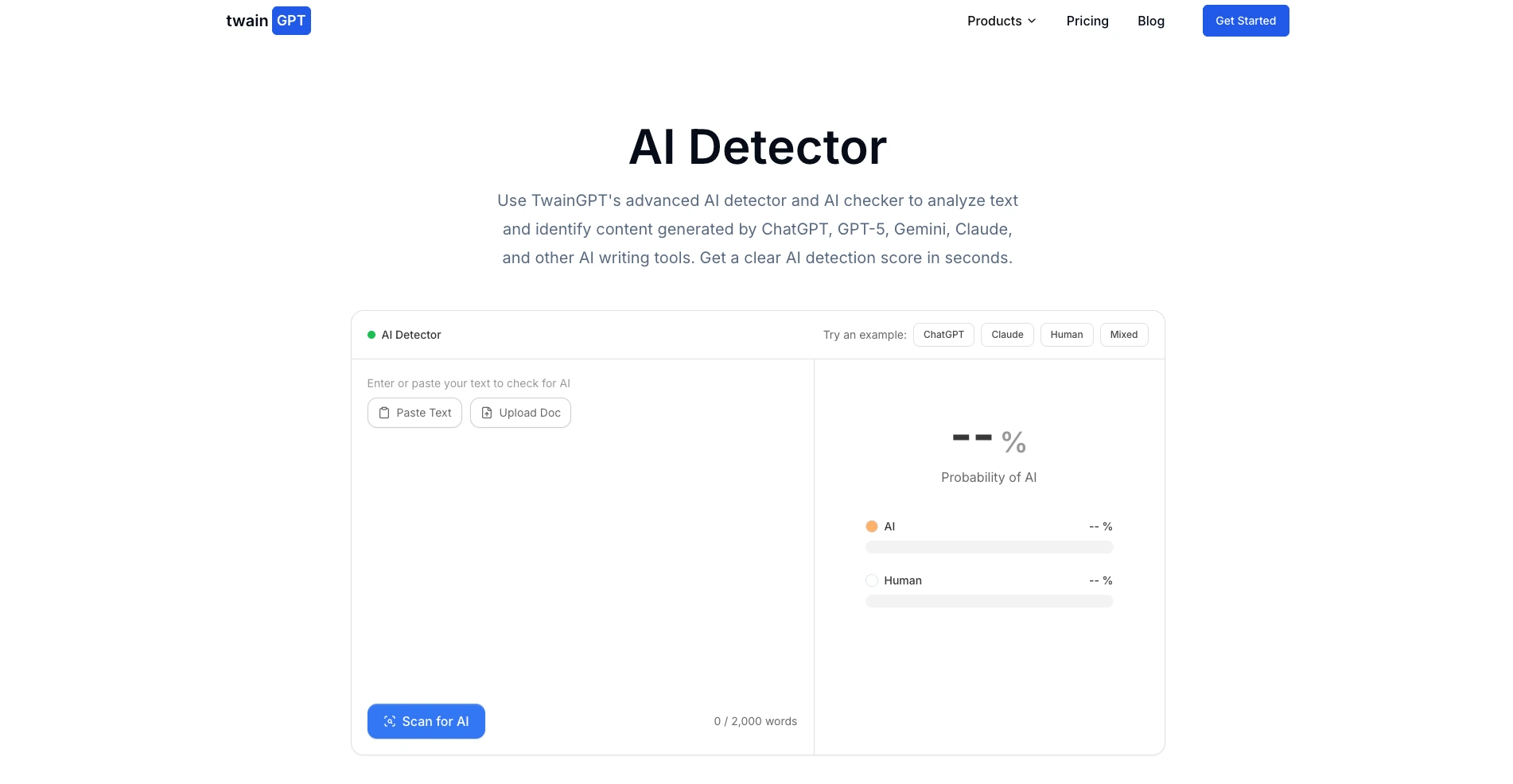
The mixed result is especially important. Mixed writing should not always be treated as 100% AI. If a draft contains both human and AI-assisted sections, a more balanced AI checker should show that uncertainty instead of flattening the whole thing into a single extreme verdict.
TwainGPT also has the advantage of being fast and easy to read. The result is clear, the interface is simple, and users can decide whether to revise the text, test again, or use the TwainGPT AI humanizer if they need to make the writing bypass AI detectors.
2. GPTZero
GPTZero performed well across the test.
It scored the AI text at 100% AI, the human text at 3% AI, and the mixed sample at 100% mixed. That is a strong result, and GPTZero's separate mixed-writing label is useful when a draft contains both human and AI-assisted sections.
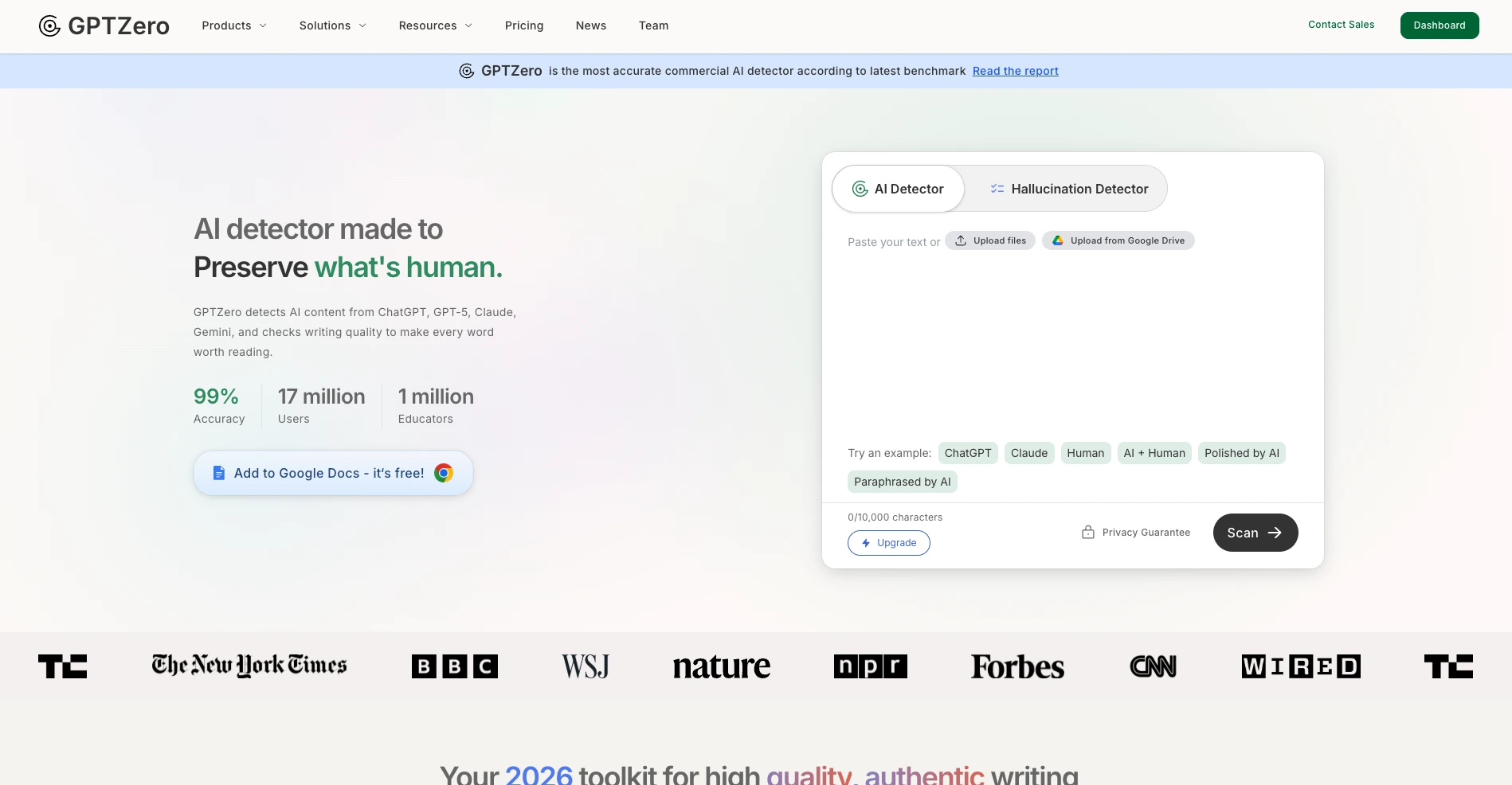
That makes GPTZero powerful, but also sensitive. The main drawback is that GPTZero can be stricter on certain writing styles, including academic writing, very formal writing, non-native English writing, or heavily edited text that starts to look paraphrased.
That does not mean GPTZero is bad. It is one of the most recognized AI detectors, especially in education. But that sensitivity is why we ranked TwainGPT higher overall for a more balanced everyday AI checker.
3. Turnitin
Turnitin is one of the most important AI detectors because so many schools and universities use it.
In our test, Turnitin scored the AI sample at 100% AI, the human sample at 0% AI, and the mixed sample at 75% AI.

That is a strong result. Turnitin caught the AI writing and avoided a false positive on the human sample. Its mixed score was high, but still more moderate than the tools that returned a full 100% AI score.
The downside is access. Turnitin is usually not available as a simple public AI checker. Most people only see Turnitin results through a school, university, or institution.
4. ZeroGPT
ZeroGPT also performed well on obvious AI text.
It scored the AI sample at 100% AI, the human sample at 1% AI, and the mixed sample at 82% AI.
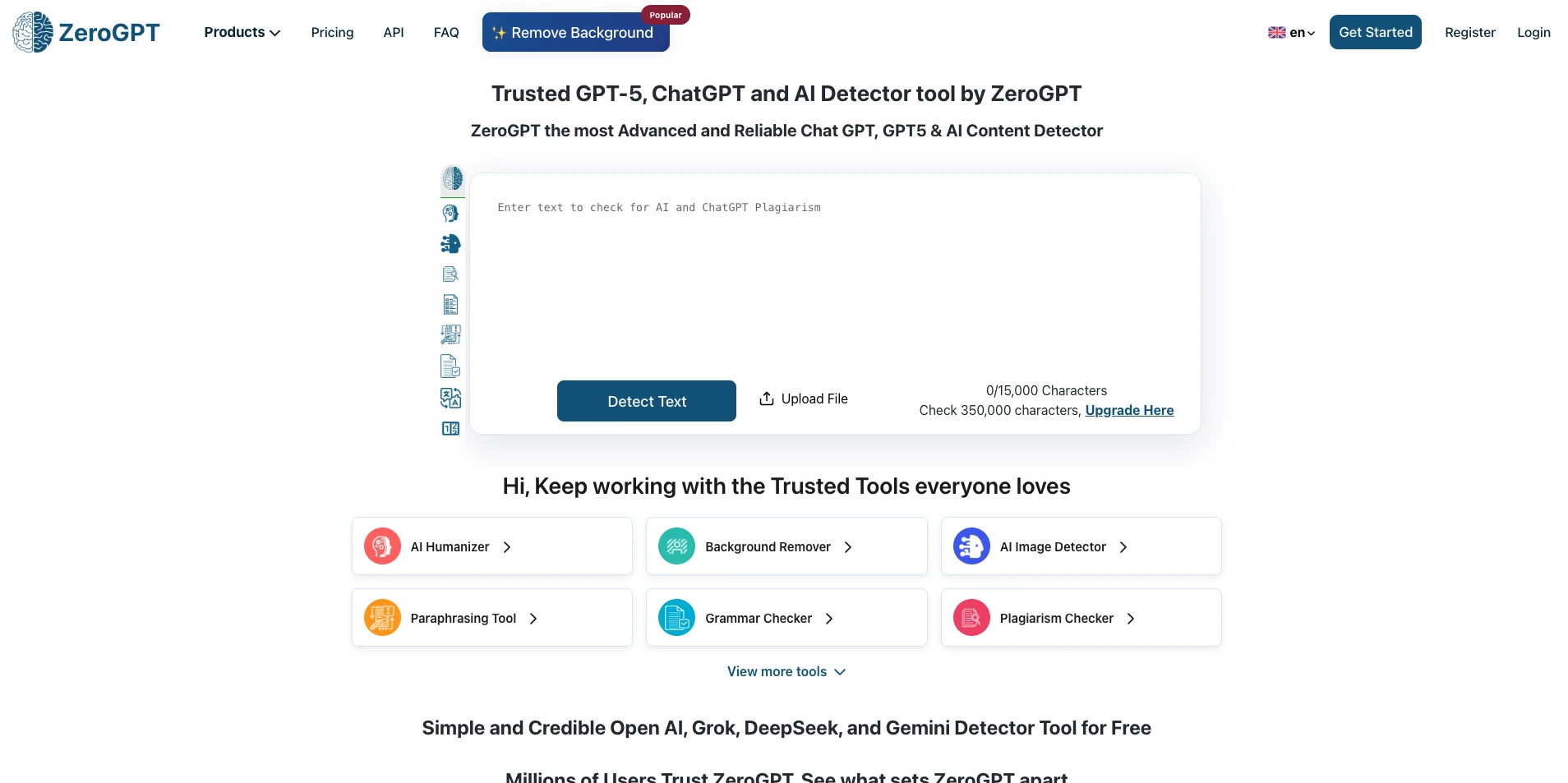
The low score on human writing was good. The higher mixed score shows that ZeroGPT can be aggressive when writing contains both human and AI-generated sections.
ZeroGPT is useful for quick checks because it is simple and easy to use. But with a mixed draft, it is worth reading the text yourself instead of treating the number as final proof.
5. Copyleaks
Copyleaks caught the AI sample perfectly and avoided a human false positive.
It scored the AI text at 100% AI, the human text at 0% AI, and the mixed text at 100% AI.
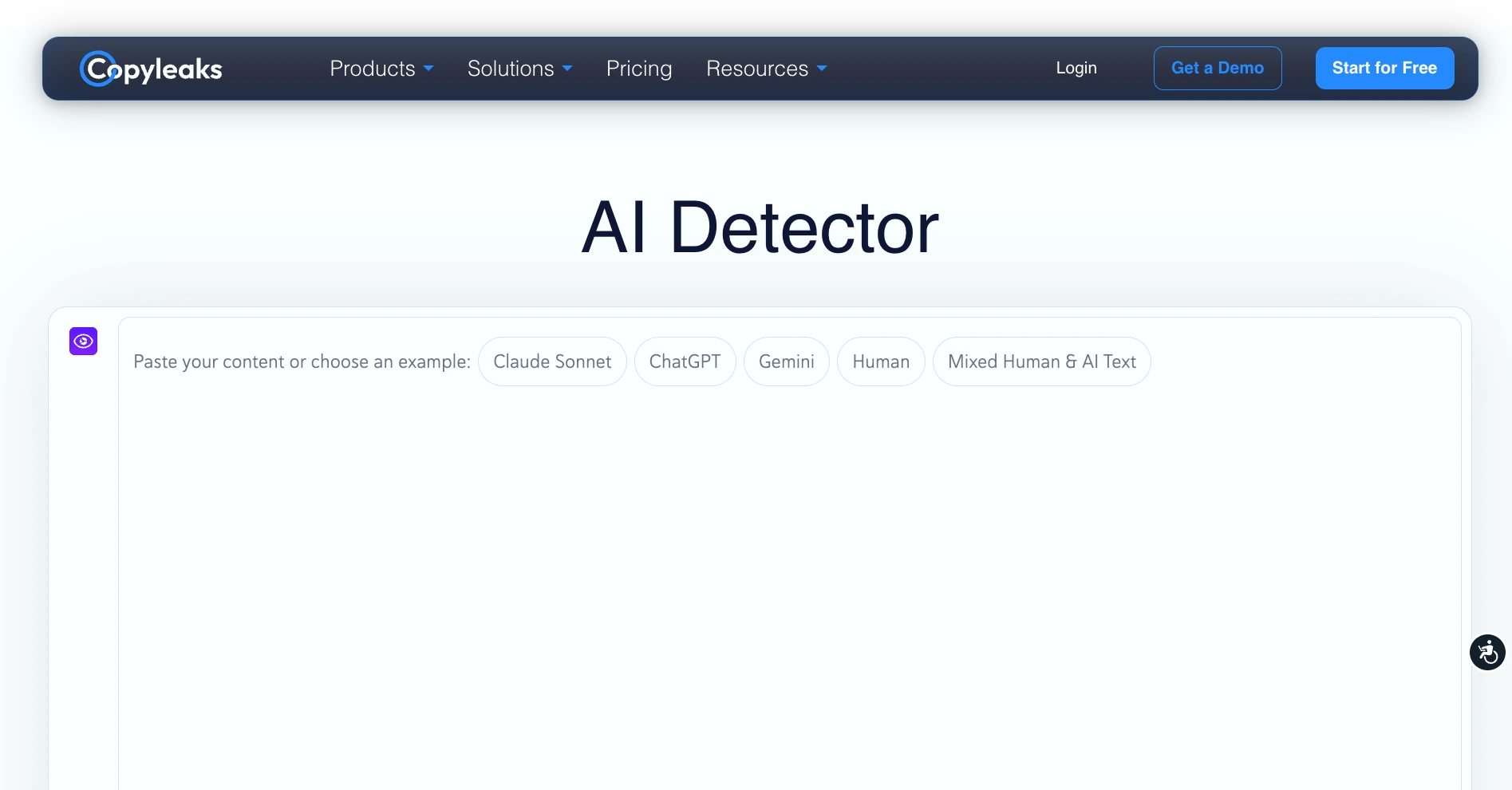
That makes Copyleaks strong at detecting AI-generated writing, but aggressive on mixed text. If the sample contains any meaningful AI writing, Copyleaks may classify the whole thing as fully AI.
Copyleaks is still a serious detector, especially for businesses, schools, and teams that want broader content integrity tools. But for mixed writing, the score may feel more severe than balanced.
6. QuillBot
QuillBot was solid, but not the strongest detector in this test.
It scored the AI text at 90% AI, the human text at 8% AI, and the mixed text at 85% AI.
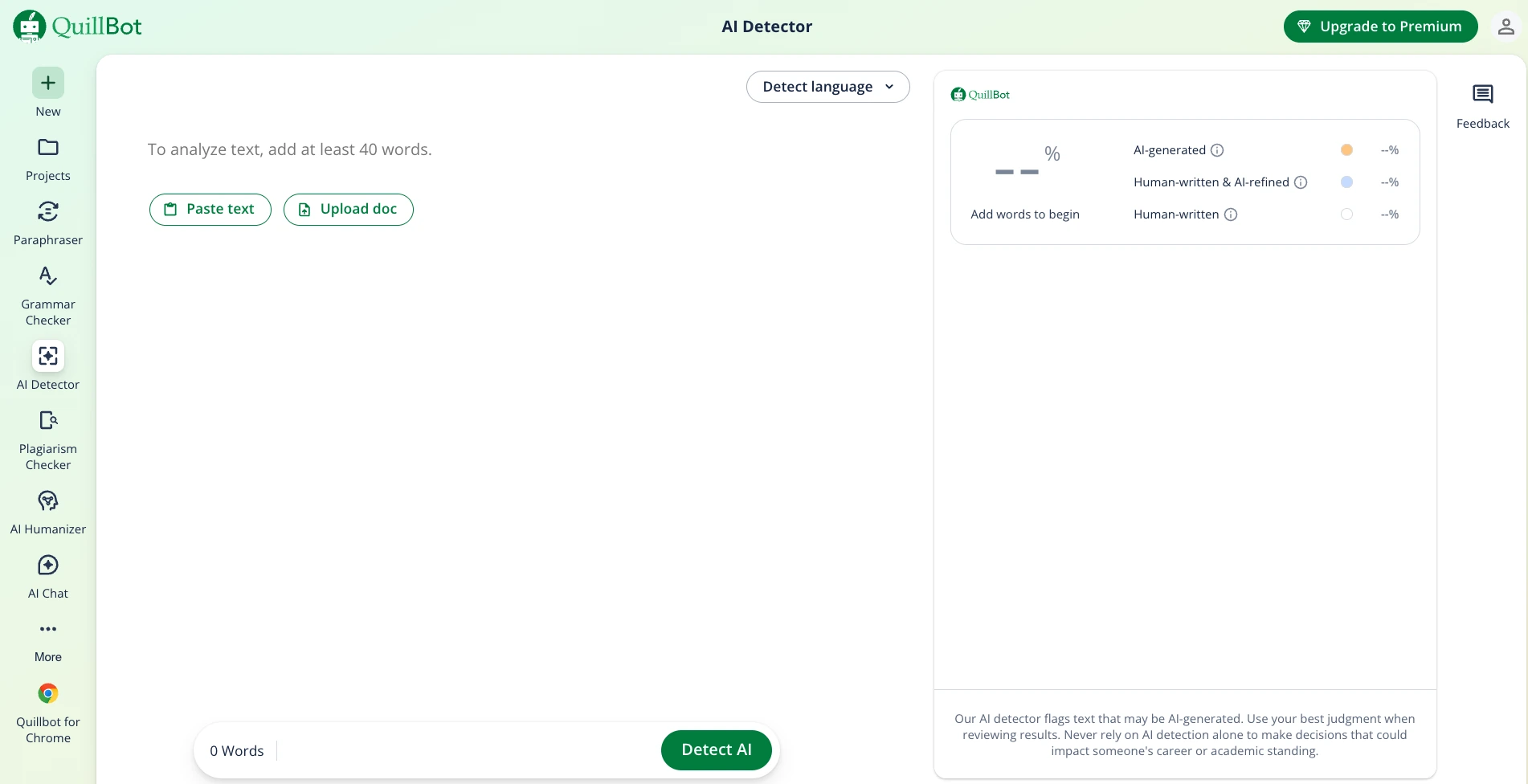
The 90% AI result is still useful, but it was less decisive than TwainGPT, GPTZero, Turnitin, ZeroGPT, and Copyleaks on the fully AI-generated sample.
The human score was also slightly higher than ideal. An 8% result is not a major false positive, but it shows that QuillBot was less clean on the human sample than tools that returned 0% or close to it.
7. Grammarly
Grammarly was the most conservative detector in this test.
It scored the AI sample at 50% AI, the human sample at 0% AI, and the mixed sample at 0% AI.
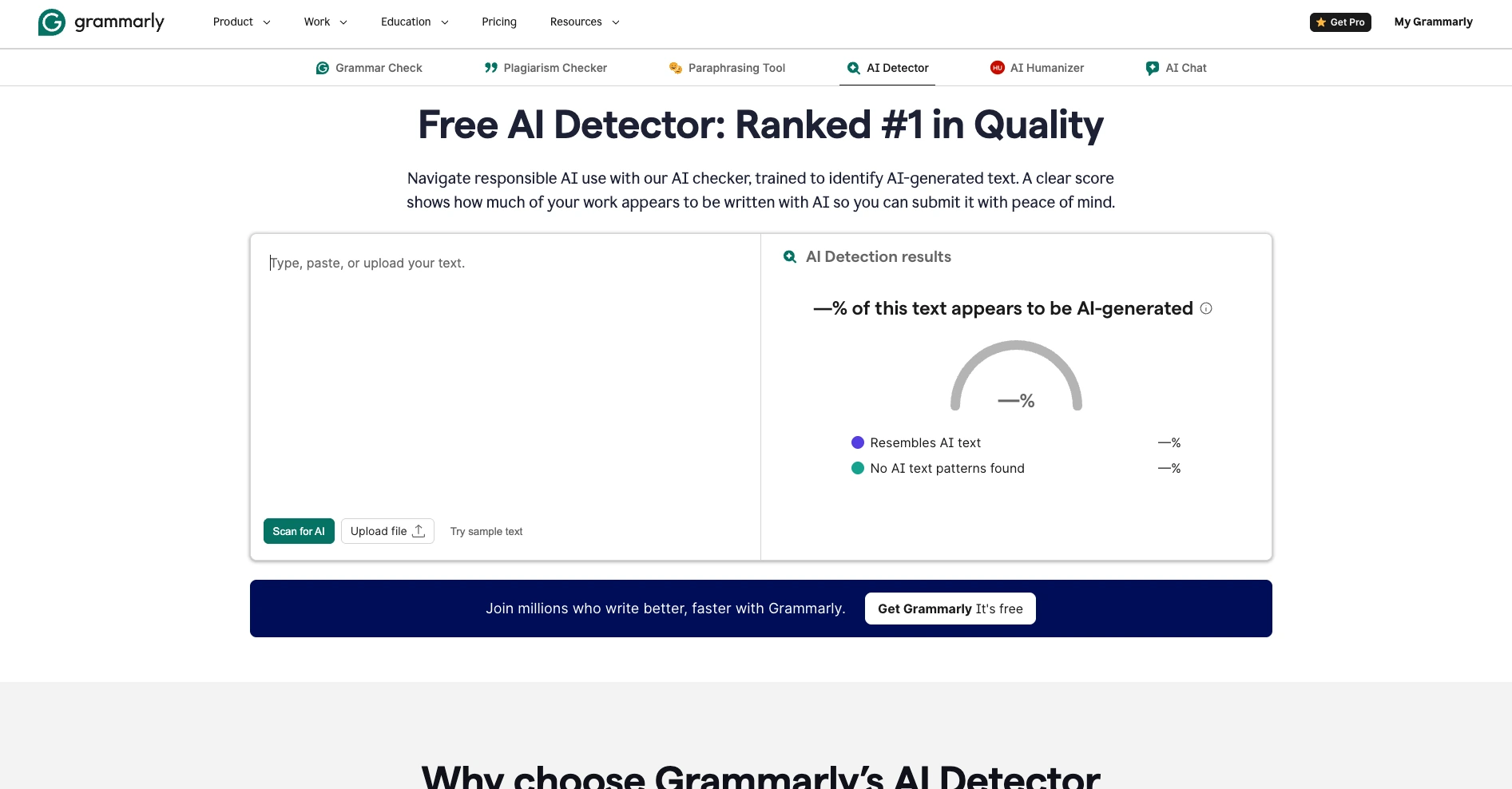
The 0% human result is good. The main takeaway is that Grammarly was too conservative for the samples we tested, especially the AI and mixed-writing examples.
Grammarly is still useful as a writing assistant, and a conservative detector can be helpful when you want to avoid false positives. But in this test, it did not flag AI writing as strongly as the more dedicated AI checkers.
8. Originality.ai
Originality.ai caught the AI sample and mixed sample, but it struggled with the human sample.
It scored the AI text at 100% AI, the human text at 53% AI, and the mixed text at 100% AI.
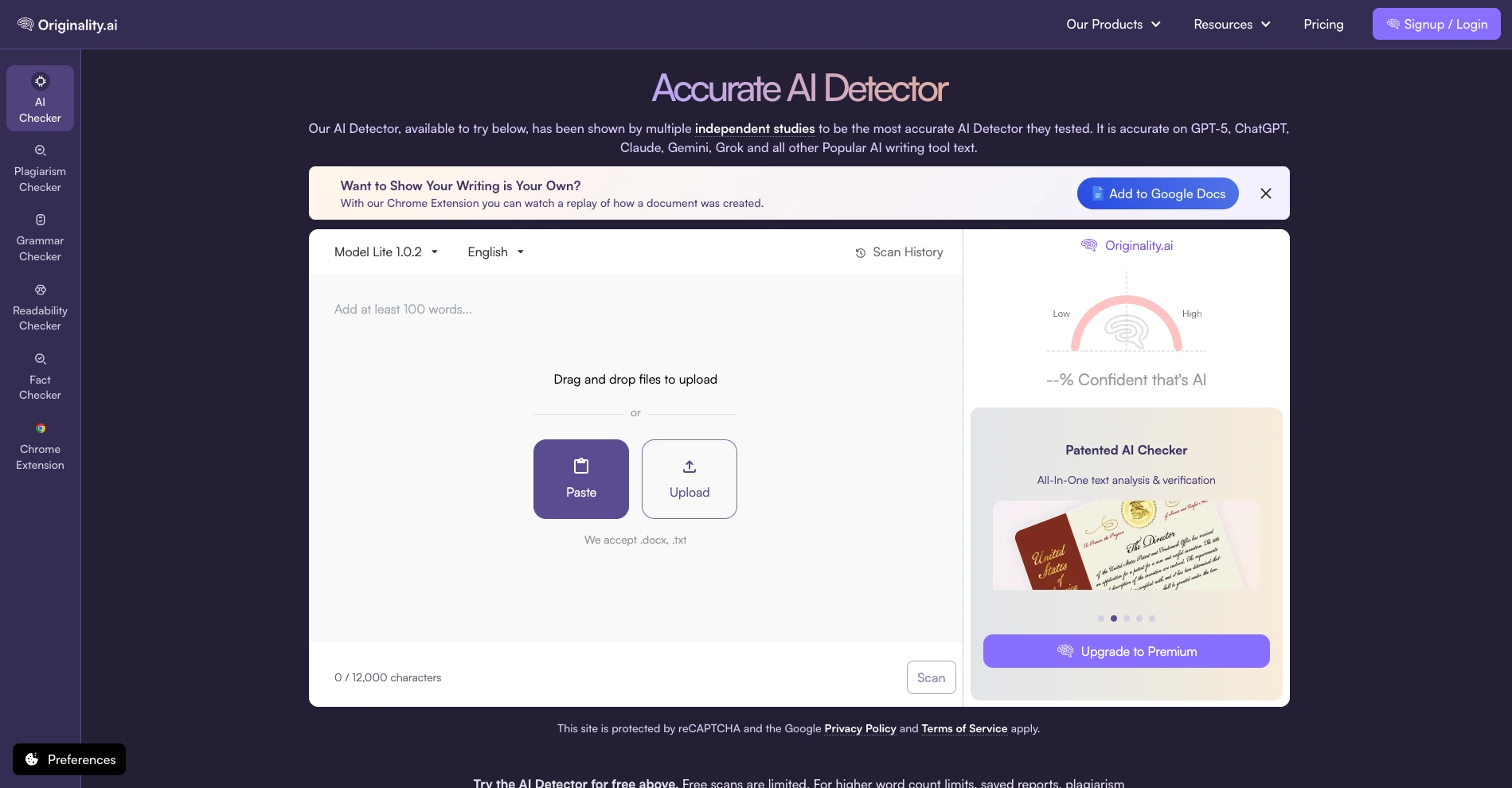
That human score is the biggest issue in the whole test. A 53% AI result on human writing is a serious false positive risk.
Originality.ai is popular with publishers and SEO teams, and it may work well in some workflows. But in this test, it was too aggressive to be the most reliable option.
What the Results Show
The biggest lesson is that most AI detectors can catch obvious AI writing.
Almost every detector scored the AI sample very high. Grammarly was the main exception, returning only 50% AI.
The harder question is how detectors handle human and mixed writing.
That is where the tools separated themselves. TwainGPT, Turnitin, ZeroGPT, GPTZero, and Copyleaks all handled human writing well. Mixed writing created even more disagreement, with some tools returning 51%, 75%, 82%, 85%, 100% mixed, or 100% AI for the same sample.
That is why TwainGPT came out strongest overall. It was accurate on AI text, clean on human text, and more balanced on mixed writing.
Are AI Detectors Actually Accurate?
Yes, modern AI detectors are accurate, but accuracy depends on the detector and the type of writing being checked.
Fully AI-generated text is usually easier to detect because it often has predictable structure, repeated phrasing, smooth transitions, and low sentence variation. Human writing is harder to judge because some people naturally write in a polished or formulaic style.
Mixed writing is the hardest category. A draft can contain human ideas, AI-generated paragraphs, edited AI text, and rewritten sections all in one piece. That is why two AI detectors can disagree even when they are scanning the same sample.
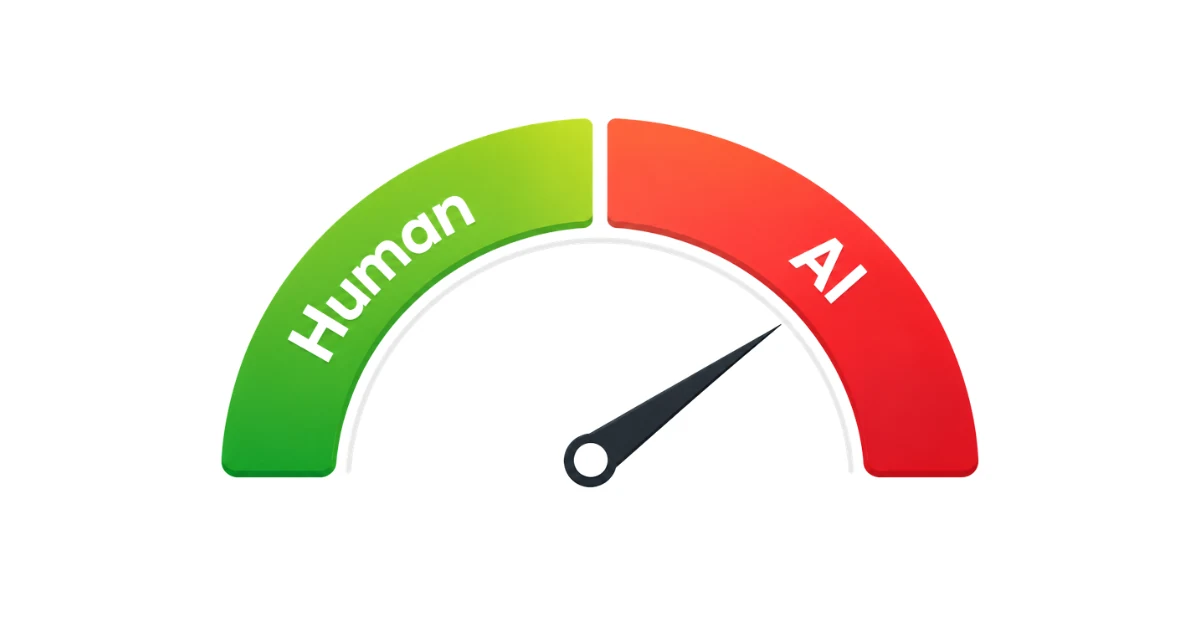
The best AI detector is not just the one that flags the most text. It is the one that catches AI-generated writing while keeping false positives low.
What Should You Do If an AI Detector Flags Your Text?
First, read the result carefully. AI detection is a signal, not absolute proof.
If the writing was AI-assisted, look for the patterns detectors usually flag: repeated transitions, predictable sentence structure, generic vocabulary, overly polished tone, and paragraphs that feel too uniform.
If you need to bypass AI detectors, a basic paraphraser usually is not enough. You need an AI humanizer that changes the structure, rhythm, flow, and wording so the text sounds more natural.
That is where TwainGPT's AI humanizer is useful. It is built to humanize AI text, make AI writing sound human, and bypass AI detectors.
Final Verdict
Based on this test, TwainGPT is the most accurate AI detector overall.
It had the best balance:
- 100% AI on AI-generated writing
- 0% AI on human writing
- A realistic mixed result instead of an extreme over-flag
GPTZero, Turnitin, ZeroGPT, Copyleaks, QuillBot, Grammarly, and Originality.ai all had strengths, but each had a clearer weakness in this test.
If you want a fast AI checker with accurate results and a clean workflow, start with TwainGPT's AI detector.
FAQ
Are AI detectors accurate?
Yes, AI detectors are mostly accurate when they are built well and tested on enough writing patterns. They are strongest on obvious AI-generated text, but results can vary on edited, humanized, or mixed writing.
Can AI detectors be wrong?
Yes, AI detectors can produce false positives and false negatives. Human writing can sometimes look formulaic, and AI writing can be edited to sound more natural. That is why AI checker results should be treated as a strong signal, not absolute proof.
Why do AI detectors disagree?
AI detectors use different models, thresholds, training data, and scoring systems. One detector may be more aggressive, while another may be more conservative. This is why the same text can receive different AI scores across different tools.
Can humanized AI text bypass AI detectors?
Yes, humanized AI text can bypass AI detectors when the writing is rewritten deeply enough. The key is changing structure, rhythm, phrasing, and sentence variation, not just swapping words.