AI detectors and plagiarism checkers are often talked about like they do the same thing.
They do not.
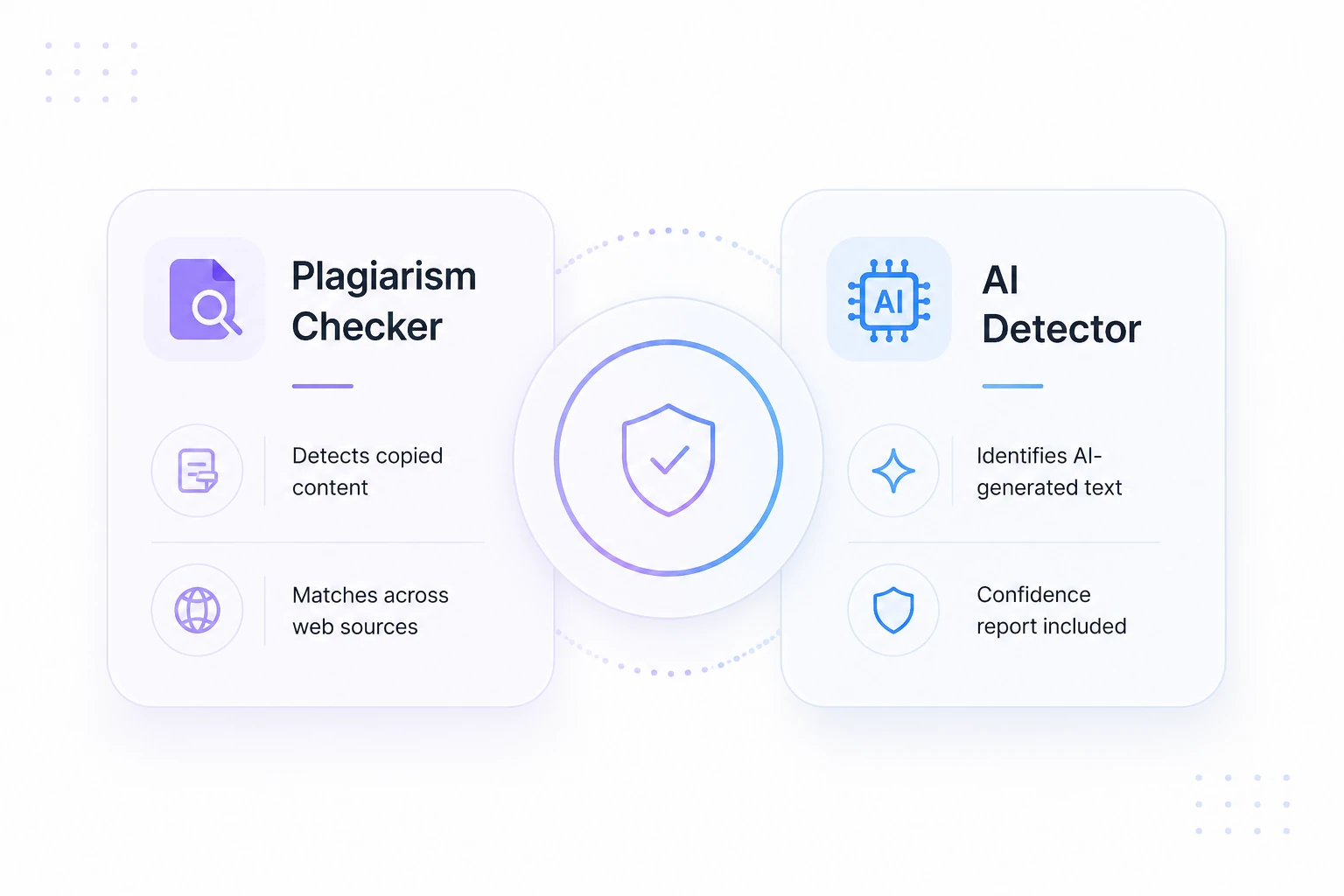
A plagiarism checker looks for copied or closely matched text from existing sources. An AI detector looks for writing patterns that may have been generated by AI. That means a draft can be completely original and still get flagged by an AI detector. It also means a human-written draft can pass AI detection but still fail a plagiarism check if it copies someone else's work.
This difference matters for students, writers, marketers, editors, and anyone publishing or submitting written work. If you use the wrong tool, you may fix the wrong problem.
What Is an AI Detector?
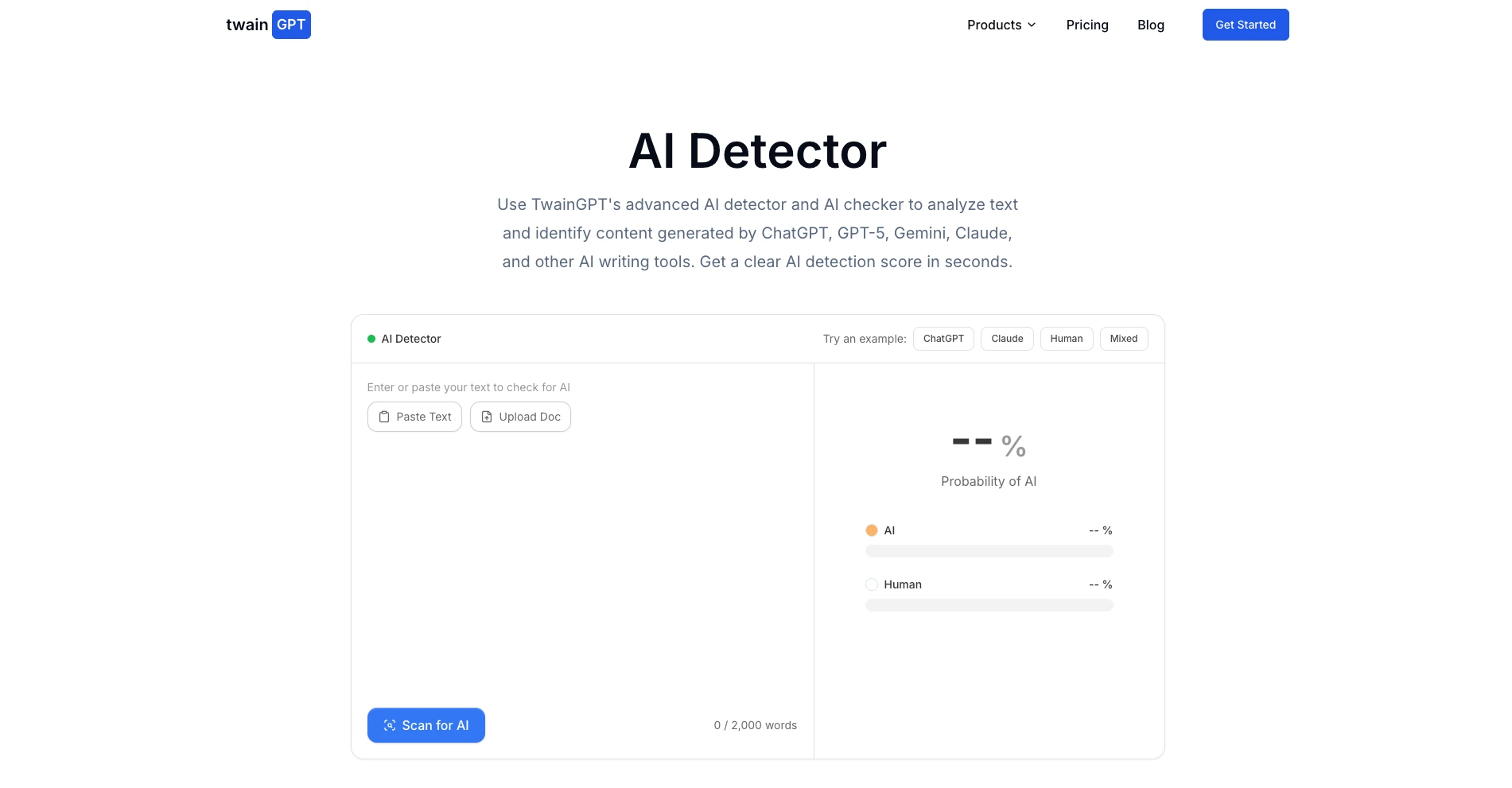
An AI detector, also called an AI checker or AI content detector, analyzes text to estimate whether it was likely generated by AI.
AI detectors are usually machine learning models trained on examples of human writing and AI-generated writing. They look for patterns that often appear in text from tools like ChatGPT, Claude, Gemini, and other AI writing systems.
Those patterns can include:
- Predictable sentence structure
- Repeated transitions
- Low sentence variation
- Generic phrasing
- Overly polished tone
- Formulaic paragraph rhythm
- AI-paraphrased writing patterns
The result is usually shown as an AI score, AI probability, or percentage. That score is not a plagiarism score. It is a model-based classification of how much the writing resembles AI-generated text.
If you want to check whether your text is AI-generated, use an AI detector. It is built for AI detection, not source matching.
What Is a Plagiarism Checker?
A plagiarism checker compares your writing against existing sources.
It looks for copied language, close matches, unattributed passages, and text that appears elsewhere online or inside a database. Plagiarism checkers are commonly used for essays, research papers, articles, web content, and professional documents.
A plagiarism checker may compare your text against:
- Websites
- Published articles
- Academic papers
- Student submissions
- Books or documents
- Public databases
The result is usually shown as a similarity score or plagiarism percentage. That score tells you how much of the text appears to match existing sources.
It does not tell you whether the text sounds AI-generated.
AI Detector vs Plagiarism Checker: The Main Difference
The easiest way to understand the difference is this:
An AI detector checks how the writing was likely produced.
A plagiarism checker checks whether the writing matches existing sources.
| Tool | What it checks | Main score | Best for |
|---|---|---|---|
| AI detector | AI writing patterns, structure, rhythm, and phrasing | AI probability or AI score | Checking whether text is AI-generated |
| Plagiarism checker | Copied text, source matches, and unattributed passages | Similarity or plagiarism score | Checking originality and source use |
Both tools can be useful, but they solve different problems.
If your writing is copied from another source, a plagiarism checker is the right tool. If your writing was created with AI and you are worried it sounds generated, an AI detector is the right tool.
Can AI Writing Be Plagiarism-Free?
Yes. AI writing is usually plagiarism-free in the traditional sense.
When an AI tool generates a new paragraph, it is not always copying a source word for word. The output may be original text that does not match anything online. That means a plagiarism checker may show a low similarity score even if the entire draft was written by AI.
But that does not mean the text is safe from AI detection.
AI-generated writing can be original and still carry AI patterns. It may have smooth structure, predictable phrasing, repeated transitions, and a tone that feels too balanced or generic. Those are the kinds of signals an AI checker is built to notice.
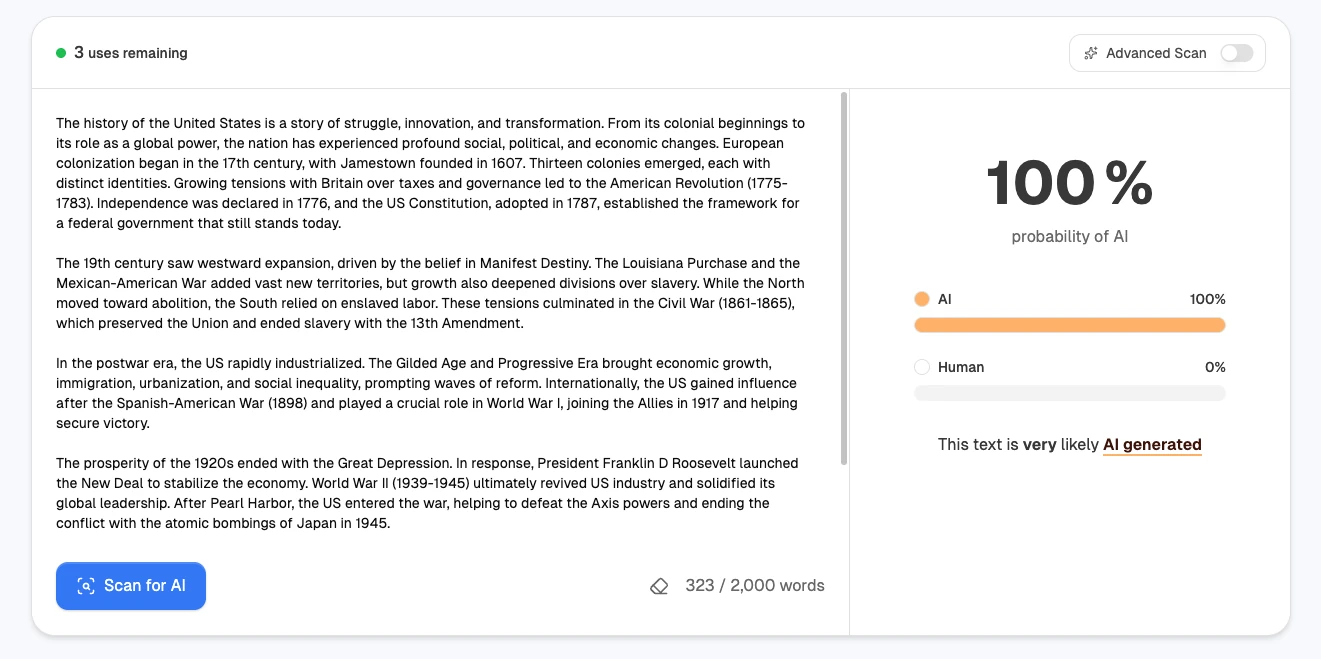
So if your question is, "Will this pass a plagiarism checker?" that is different from asking, "Will this pass an AI detector?"
You may need both answers.
Can Human Writing Still Be Plagiarized?
Yes. Human writing can still be plagiarized.
A student, writer, or marketer can write without AI and still copy too closely from another source. If the text uses someone else's words, structure, or ideas without proper credit, a plagiarism checker may flag it.
That is why passing an AI detector does not automatically mean the work is original.
A human-written essay can pass AI detection and still have a high similarity score. A blog post can sound completely human and still reuse copied product descriptions, competitor copy, or uncited research.
AI detection and plagiarism detection measure different risks.
Does Turnitin Check for Both?
Turnitin is one of the best-known examples of a platform that can include both plagiarism checking and AI detection.
Its similarity report looks for matching text and source overlap. Its AI writing report looks for writing that appears AI-generated or AI-paraphrased. Those reports are related, but they are not the same.
This is why Turnitin can show a paper with low similarity but a high AI score. The paper may not be copied from a source, but it may still look like AI-generated writing.
The reverse can also happen. A paper can have a low AI score but still contain copied text from a website, article, or previous submission.
If your school, client, or publisher uses Turnitin or another tool with both checks, you need to think about both originality and AI detection.
Which Tool Should Students Use?
Students should understand what each tool is for.
Use a plagiarism checker when you need to make sure your sources are handled correctly. This is especially important for research papers, essays with citations, literature reviews, and assignments that rely on outside information.
Use an AI detector when you want to know whether your writing looks AI-generated. This matters if you used AI to brainstorm, draft, outline, summarize, paraphrase, or polish your work.
For students, the biggest mistake is assuming a low plagiarism score means the paper is safe. It might be original, but still AI-detectable.
If your draft was created with AI, check it with an AI detector first. If the text gets flagged, use a reliable AI humanizer to humanize the writing, remove robotic patterns, and bypass AI detectors while maintaining the original meaning.
Which Tool Should Writers and Marketers Use?
Writers and marketers usually need both tools, but for different reasons.
A plagiarism checker helps protect originality. It can catch copied product copy, duplicated blog sections, unattributed research, or content that is too close to another source.
An AI detector helps protect trust. It can show whether a draft sounds generated, generic, or overly automated before it goes live.
This matters for:
- Blog posts
- Essays
- Landing pages
- Product descriptions
- Social media content
- Client work
AI content is not automatically bad. But if the writing feels robotic, generic, or obviously generated, it can hurt credibility. An AI detector helps identify that risk before publishing.
What to Do If Your Text Is Flagged as AI
If your text is flagged as AI, do not treat the score like the final verdict. Read the writing yourself and look for the patterns that made it feel generated.
Common issues include repeated phrasing, generic claims, overly balanced paragraphs, and a tone that sounds too polished for the audience.
You can fix those issues manually, but it takes time. You need to change structure, rhythm, sentence variety, and phrasing, not just swap a few words.
The faster option is to use TwainGPT.
TwainGPT's AI humanizer is built to humanize AI text and bypass AI detectors by rewriting the deeper writing patterns that detectors look for. It changes more than surface wording, while still keeping the original meaning.
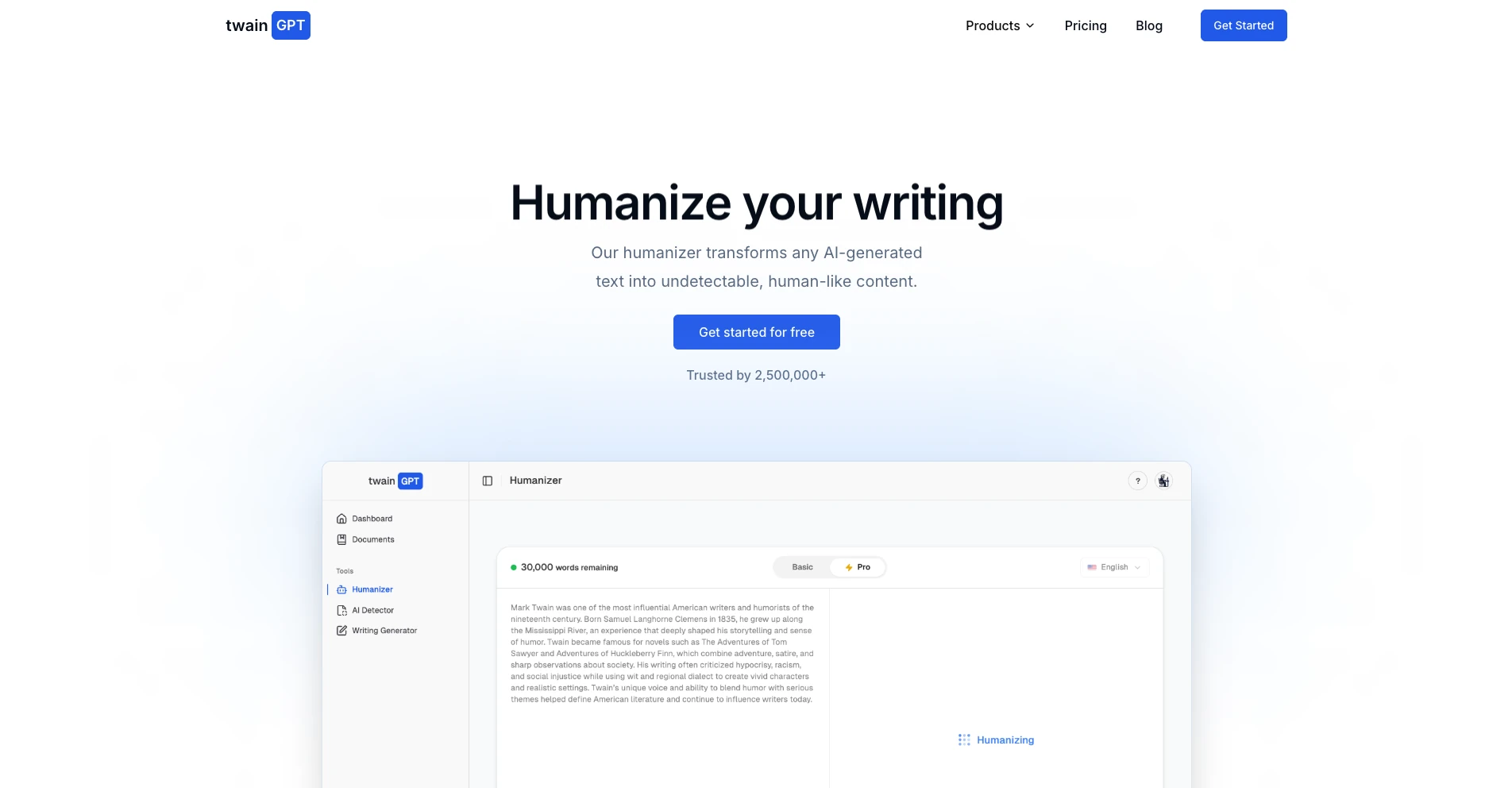
After humanizing the text, you can run it through an AI checker again to see whether it reads as more human.
What to Do If Your Text Is Flagged for Plagiarism
If your text is flagged by a plagiarism checker, the fix is different.
Do not try to "humanize" copied text and call it done. A plagiarism issue usually means the writing is too close to an existing source or missing proper attribution.
Instead, you should:
- Add proper citations
- Rewrite copied passages in your own words
- Use quotation marks when needed
- Remove duplicated sections
- Check the source match carefully
- Make sure the final version reflects your own work
An AI humanizer helps with AI detection. A plagiarism checker helps with source originality. They are not interchangeable.
Do You Need Both an AI Detector and a Plagiarism Checker?
In many cases, yes.
If you are submitting a school assignment, publishing an article, or sending professional work to a client, both checks can be useful. One checks for AI writing patterns. The other checks for copied source matches.
Here is the simplest way to decide:
| Situation | Tool to use |
|---|---|
| You used ChatGPT or another AI tool | AI detector |
| You copied or referenced outside sources | Plagiarism checker |
| You want to know if writing sounds AI-generated | AI detector |
| You want to check source similarity | Plagiarism checker |
| You want the safest final draft | Use both |
For AI-generated writing, the workflow is simple: check the text with an AI detector, humanize anything that gets flagged, then review originality and citations before submitting or publishing.
Final Answer
An AI detector and a plagiarism checker are not the same thing.
A plagiarism checker finds copied or closely matched text. An AI detector checks whether the writing pattern looks AI-generated.
AI writing can be plagiarism-free and still get flagged by an AI detector. Human writing can pass AI detection and still be plagiarized.
If your concern is AI detection, use TwainGPT's AI detector to check the text. If the writing gets flagged, use TwainGPT's AI humanizer to humanize the draft and bypass AI detectors before submitting or publishing.
FAQ
Is an AI detector the same as a plagiarism checker?
No, an AI detector checks whether text is AI-generated. A plagiarism checker checks whether text matches existing sources.
Can AI writing be plagiarism-free?
Yes, AI writing is often original in the sense that it does not copy a source word for word, but it can still be detected as AI-generated.
Can AI detectors detect plagiarism?
No, AI detectors are not built to find source matches. They estimate whether the writing looks AI-generated.
Does Turnitin check for AI and plagiarism?
Turnitin can include both similarity checking and AI writing detection, depending on the institution and settings.
What should I do if my text is flagged as AI?
Review the text for AI patterns, then use a reliable AI humanizer like TwainGPT to make the writing sound more natural and human.