Introduction
Turnitin is one of the most widely used academic detection systems in the world. Colleges, universities, high schools, and online learning platforms use it to check submissions for plagiarism, similarity, and AI-generated writing.
That makes it different from a random free AI checker. Turnitin is often built directly into the assignment workflow, which means students may not get to test their paper before an instructor sees the report.
So the real question is not only whether Turnitin can detect AI writing. It is how well Turnitin detects AI writing from tools like ChatGPT, Claude, Gemini, and whether paraphrasing or humanizing the text actually changes the result.
In this guide, we will break down how Turnitin AI detection works, what kinds of writing it tends to flag, and why straight AI-generated essays are risky to submit without rewriting.
The short version is simple: Turnitin can detect AI writing, especially if the text is mostly AI-generated or only lightly edited. Basic paraphrasing usually is not enough. If you want AI text to sound human and bypass AI detectors like Turnitin, you need a stronger AI humanizer built for that job.
What Is Turnitin AI Detection?
Turnitin started as a plagiarism and similarity checker, but it now includes AI writing detection for many institutions. The AI writing report is designed to estimate how much of a submission looks like it was generated or heavily rewritten by AI.
That matters because plagiarism detection and AI detection are not the same thing.
Plagiarism detection looks for copied or closely matched text from existing sources. AI detection looks for writing patterns that resemble machine-generated text. A paper can be original and still be flagged as AI-generated. It can also have no copied sources but still sound like it came from an AI writing tool.
Turnitin's AI detector is especially important because it is not just another public AI checker. It is built into academic submission systems, so a student may only find out about the AI score after the assignment is submitted.
How Turnitin Detects AI Writing
Turnitin does not only look for copied text. Its AI writing detector looks for patterns that are common in machine-generated writing.
AI-generated text often has a certain rhythm. It can sound polished, balanced, and organized, but also predictable. Sentences may have similar lengths, paragraphs may follow the same structure, and transitions may repeat in a way that feels too clean.
Turnitin looks for signals like:
- Predictable sentence structure
- Repeated phrasing and transitions
- Low sentence variation
- Overly polished or generic wording
- Formulaic paragraph rhythm
- AI-paraphrased sections
This is why ChatGPT output is risky. Even if the writing is grammatically correct, it can still carry the structure and pacing of AI-generated text.
Does Turnitin Detect ChatGPT?
Yes, Turnitin can detect ChatGPT writing.
In our test, we ran a ChatGPT-generated sample through Turnitin. Turnitin marked it as 100% detected as AI.
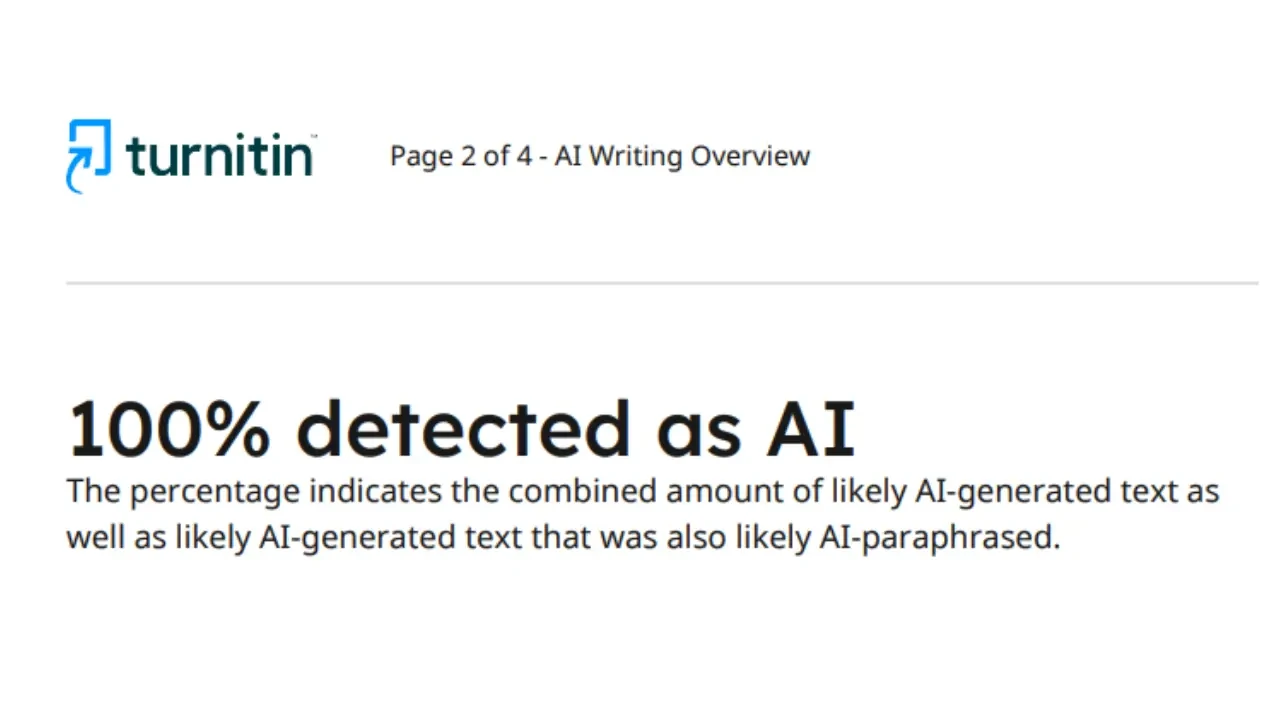
That result is not surprising. Straight AI writing is usually the easiest type of text for a detector to catch. It often has the clean structure, predictable phrasing, and polished tone that AI detectors are trained to identify.
This applies beyond ChatGPT too. Turnitin can flag writing from Claude, Gemini, and other AI models when the output still sounds machine-generated.
The exact score can change depending on the topic, length, editing, and writing style. But if the draft is mostly AI-written, you should assume Turnitin can detect it.
What Kind of AI Writing Does Turnitin Catch Best?
Turnitin is strongest when the writing is obviously AI-generated.
That includes essays or paragraphs that are clean, generic, balanced, and predictable from start to finish. AI writing often explains a topic in a smooth but formulaic way. It may sound correct, but the rhythm can feel too even.
Turnitin is more likely to flag writing when:
- The entire draft was written by AI
- The introduction and conclusion sound generic
- Every paragraph follows the same structure
- The writing uses repeated transitions
- The paper has very little sentence variation
This is why students should be careful with copy-and-paste AI output. Even if the facts are right, the writing pattern can still look generated.
Can Turnitin Detect AI Paraphrasing or Humanized Text?
Yes, Turnitin can detect AI paraphrasing and weak humanized text when the tool only changes words.
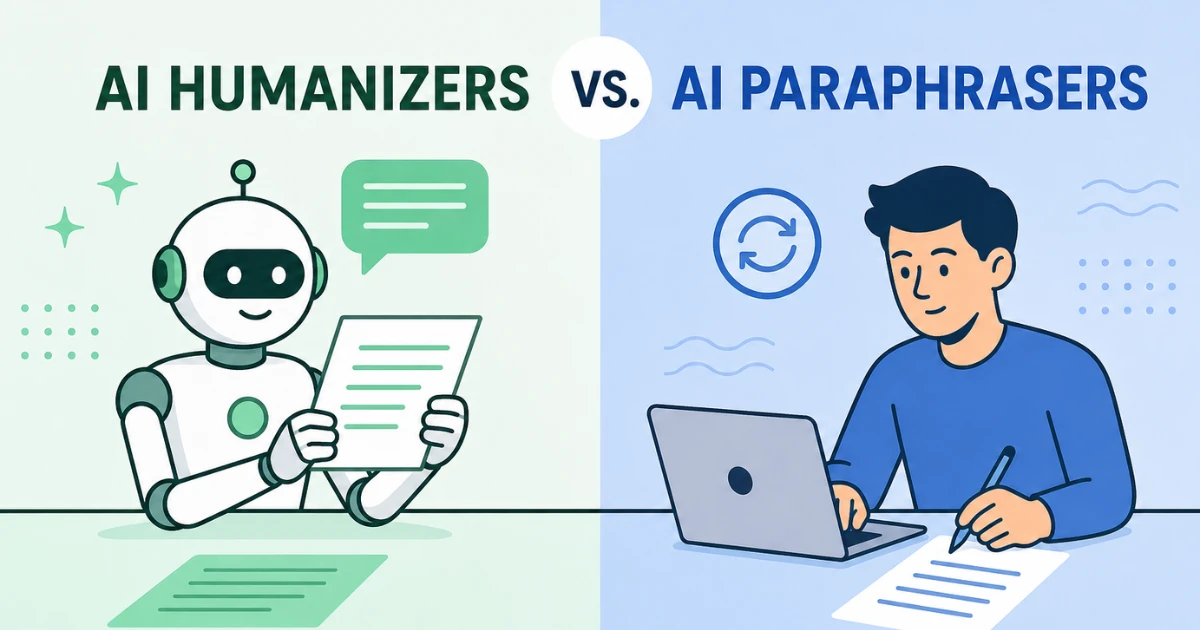
This is where many students get caught. A basic paraphraser might swap phrases, reorder sentences, or add synonyms, but the draft can still keep the same AI rhythm, paragraph structure, and predictable flow underneath.
Real AI humanization goes deeper. A reliable AI humanizer rewrites the structure, pacing, phrasing, and tone so the text sounds natural instead of simply reworded. Other strong AI humanizers can help, but the tool has to be built to bypass AI detectors, not just paraphrase.
That is why TwainGPT is different. TwainGPT is built to humanize AI text and bypass AI detectors like Turnitin while keeping the original meaning intact.
How to Bypass Turnitin AI Detection
To bypass Turnitin, you need to remove the AI writing signals that detectors look for.
That means changing more than vocabulary. The writing has to feel natural, varied, and human. It should keep the original meaning, but avoid the robotic structure that AI detectors often catch.
That is what TwainGPT's AI humanizer is built for. TwainGPT humanizes AI text by rewriting the structure, rhythm, wording, and flow so AI-generated writing sounds more human and can bypass AI detectors like Turnitin.
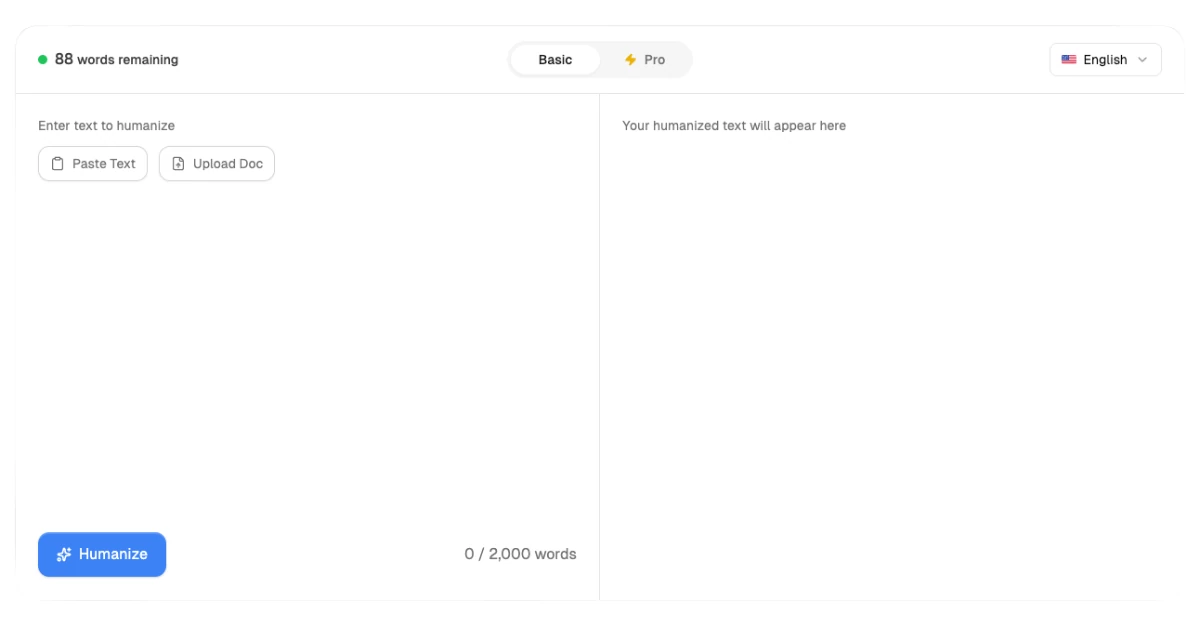
We tested Turnitin with a ChatGPT-written essay, then ran the writing through TwainGPT's AI humanizer. After humanizing it, Turnitin came back with 0% detected as AI.
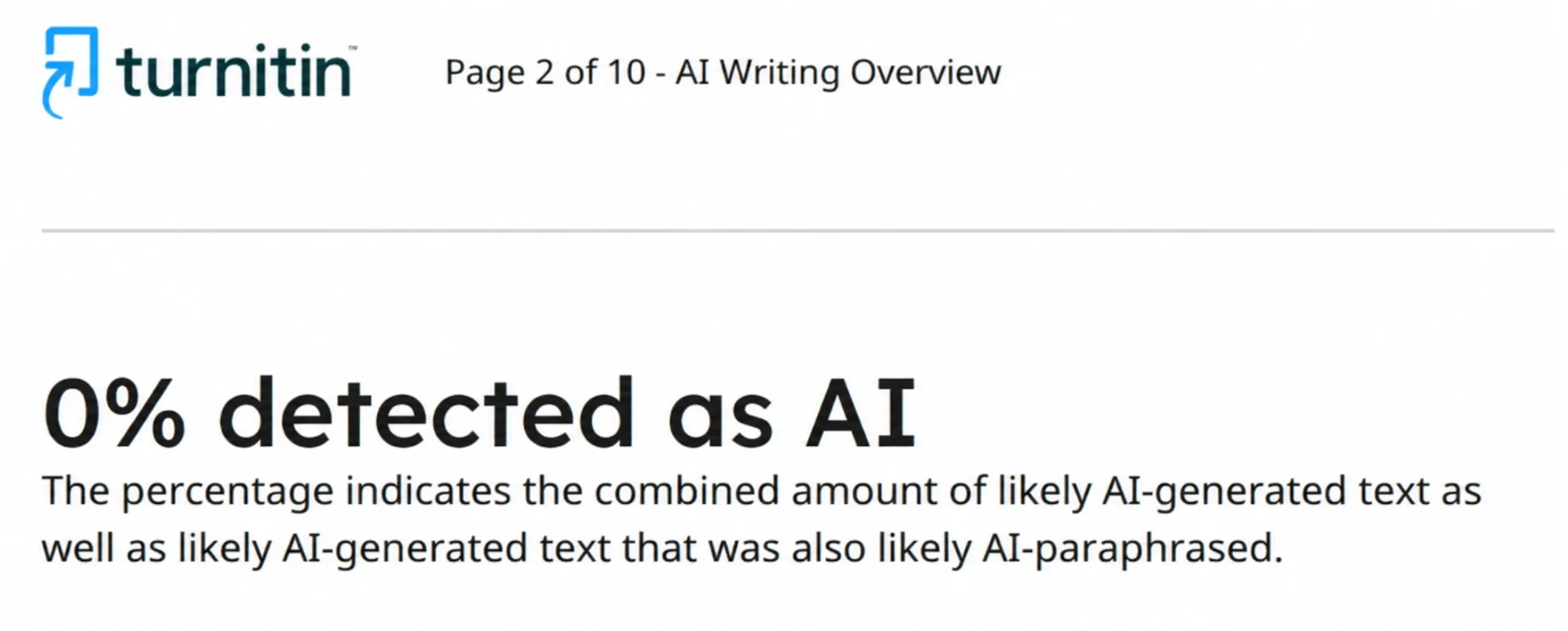
That is the difference between basic paraphrasing and real AI humanization. A weak paraphraser may only change surface wording. TwainGPT is designed to make AI writing sound human enough to bypass Turnitin and other major AI detectors.
What Does a Turnitin AI Score Mean?
A Turnitin AI score is a model-based detection score.
When Turnitin shows a percentage, it is using its AI detection model to score how much of the submission matches patterns associated with AI-generated writing. A high score means the text strongly matches those AI writing signals. A low score means the writing looks more human according to Turnitin's system.
The score comes from machine learning and pattern recognition, not a simple keyword check. Turnitin looks at structure, phrasing, sentence rhythm, and other writing signals to classify the text.
That said, a high score can still create real problems for students. If a paper comes back as heavily AI-generated, an instructor may question the work, ask for an explanation, or apply the school's AI policy.
That is why it is better to fix AI-sounding writing before submitting instead of hoping the detector misses it.
Can Students Access Turnitin?
Students generally cannot access Turnitin directly.
Turnitin is sold to schools, universities, and institutions, not directly to regular student users. In most cases, students submit work through a class portal, learning management system, or assignment page. The instructor or institution controls the Turnitin report.
That means students usually cannot just paste text into Turnitin before submitting an assignment. Some schools may show students a similarity report, but the full AI writing report is normally controlled by the instructor or institution.
This is why public AI checkers and AI humanizers are so common. Students want to understand how their writing might be read before they submit it.
If you cannot access Turnitin directly, you can still use a public AI detector to check your text first, then use TwainGPT to humanize any sections that still sound AI-generated.
Why Students Worry About Turnitin
Students worry about Turnitin because the tool is usually tied to real academic consequences.
If a free AI checker flags a paragraph, you can revise it and move on. If Turnitin flags an assignment after submission, the situation can feel much more serious. The report may be reviewed by an instructor, department, or academic integrity office.
That does not mean every AI score becomes a penalty. Schools have different rules, and instructors interpret reports differently. But because students often cannot see the Turnitin report before submitting, the uncertainty is stressful.
This is why many students check their work before submission, revise anything that sounds robotic, and use an AI humanizer when the draft was created with AI assistance.
Is Turnitin Always Right?
No AI detector is perfect, including Turnitin.
Turnitin is accurate and widely trusted, but AI detection is still probabilistic. That means the score is based on patterns, not absolute proof. A detector can make mistakes.
False positives can happen when human writing is very formal, polished, repetitive, or formulaic. False negatives can happen when AI text has been heavily edited or properly humanized.
Still, Turnitin is strong enough that students should take it seriously. If a draft comes straight from AI, there is a real risk it will be flagged.
Does Turnitin Detect AI Better Than Free AI Detectors?
Turnitin is one of the strongest AI detectors because it was built for academic environments and is widely used by schools. It is designed for essays, coursework, research writing, and student submissions.
Free AI detectors can still be useful, especially when you need a quick pre-check before submitting. Tools like GPTZero, ZeroGPT, Copyleaks, QuillBot, and TwainGPT's AI detector can help you understand whether your text looks AI-generated.
The difference is access and context. Turnitin is often the detector your school actually uses. Public AI detectors are easier to access before submission.
For students, the practical move is simple: assume Turnitin is strong, check your writing before submitting, and humanize AI-generated sections before they become a problem.
Final Answer
Yes, Turnitin detects AI writing.
If your essay or assignment was written straight from ChatGPT, Gemini, or another AI tool, Turnitin can flag it.
Basic paraphrasing is usually not enough because Turnitin looks at deeper writing patterns, not just words. The safest approach is to treat AI writing as detectable and use a strong AI humanizer before submitting.
For students who are worried about Turnitin, TwainGPT's AI humanizer is built to humanize AI text and bypass AI detectors.
FAQ
Does Turnitin detect ChatGPT?
Yes. Turnitin can detect ChatGPT writing, especially when the text is mostly AI-generated or only lightly edited.
Can Turnitin be wrong?
Yes, Turnitin can be wrong because AI detection is based on probability and writing patterns. It is accurate, but no AI detector is perfect.
How can students access Turnitin?
Students generally cannot access Turnitin directly. Turnitin is usually available through schools, instructors, and institutional accounts.
Can students see their Turnitin AI score?
It depends on the school and instructor settings. Some students may see a similarity report, but many students do not see the full Turnitin AI writing report before submitting.
How do you bypass Turnitin AI detection?
Use TwainGPT's AI humanizer. TwainGPT rewrites AI-generated text so it sounds more natural and bypasses Turnitin.